
Gerald Cinamon is an American designer, typographer, and author known for restrained, quietly bold work shaped by Swiss modernism. He was chief designer at Penguin Books through the 1960s and 70s, and also produced work for Monotype and the BBC.
From Boston to Basel
Born in Boston in 1930, Cinamon studied at the Massachusetts School of Art, then earned a master’s at Yale’s Department of Graphic Arts. His teachers there included Alvin Eisenman, Herbert Matter, and Paul Rand.
His final-year project, Darwin, Wallace and the Theory of Natural Selection, was chosen by AIGA as one of its Fifty Books of the Year in 1957. The following year, a Fulbright scholarship took him to Basel to study under the Swiss master Armin Hofmann.
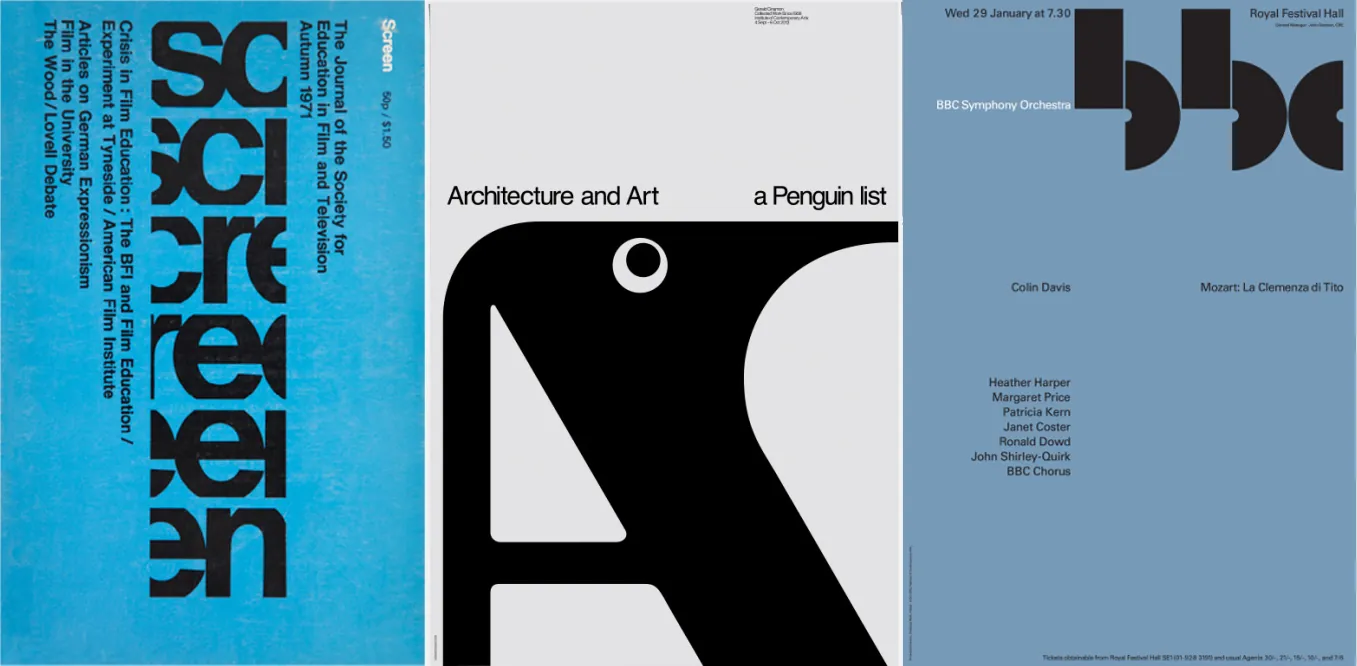
Making his name in Europe
In 1960, he moved to England, where he designed books—notably for Penguin Books, where he later became chief designer. He has also designed books for publishers such as Weidenfeld & Nicolson, The British Museum, Soncino Press, and New Left Books.
Gerald Cinamon also worked with clients outside the publishing sector, such as the British Film Institute and the BBC, designing posters, calendars, promotional materials, and logos.
Initially, he worked with Hans Schmoller, and following Schmoller’s death, he served as guest editor and designer for a special issue of The Monotype Recorder titled Hans Schmoller, Typographer, His Life and Work.
An excerpt from his book—in which Cinamon explains how he came to join the team at Penguin Books—was published in an article in Eye magazine.
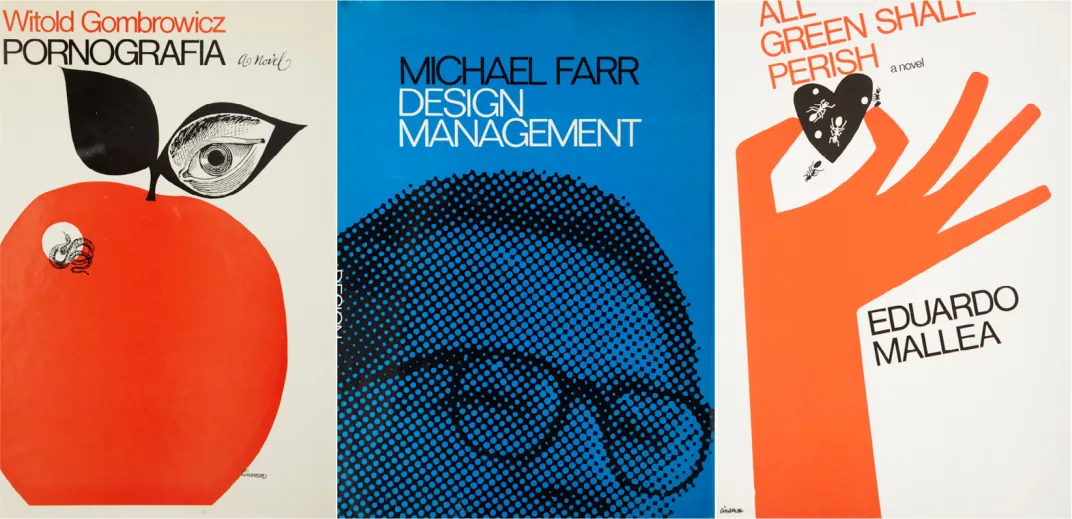
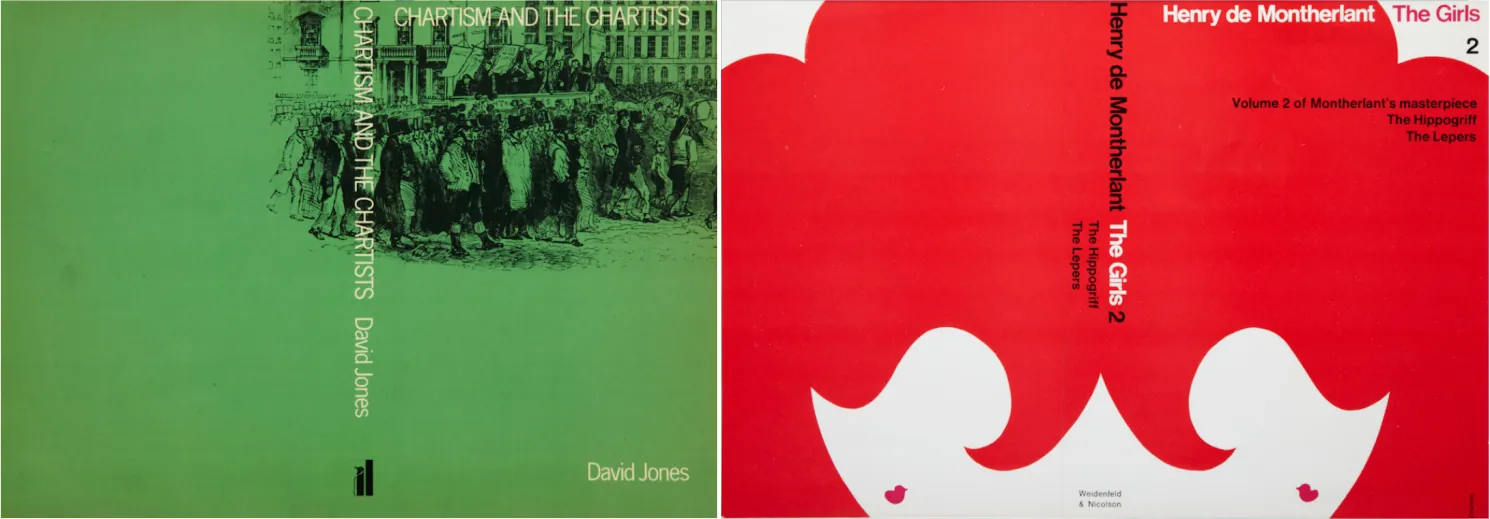
A second career as author
Cinamon left Penguin in 1985 and turned to writing. His books include Rudolf Koch: Letterer, Type Designer, Teacher (2000) and Emil Rudolf Weiss: The Typography of an Artist (2012).
In 2013, after years of research, he published German Graphic Designers during the Hitler Period as an online directory. That same year, a monograph of his own work, Gerald Cinamon: Graphic Design, appeared alongside the exhibition Collected Works at London’s Institute of Contemporary Arts. David Pearson gave a talk on Cinamon and his work at the exhibition, which you can watch below.
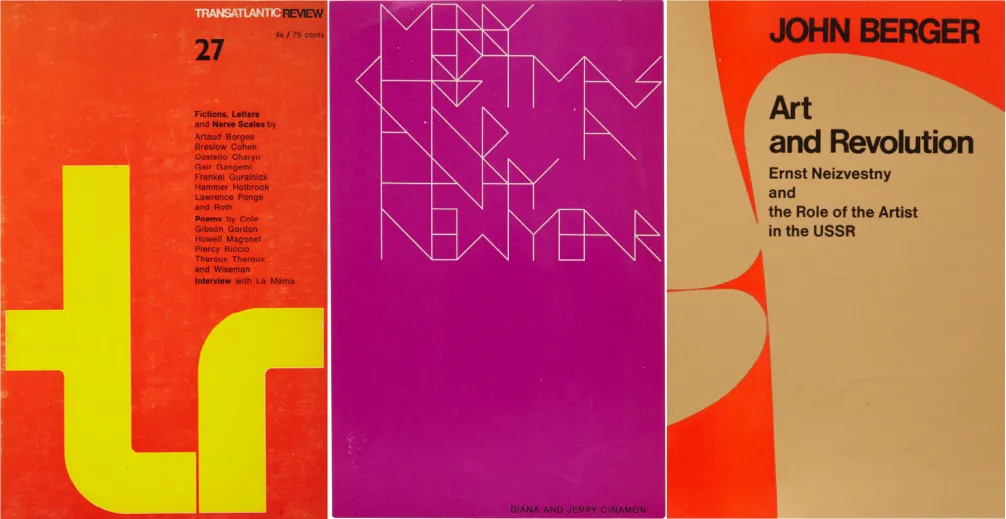
Why he matters
Cinamon’s minimalist, evocative style and his architectural handling of type and image were radical for their time, and they helped bring a modernist approach to British graphic design.
Not convinced yet? His Instagram account is a great place to see more of his work.